Functions of Kidneys in our Body
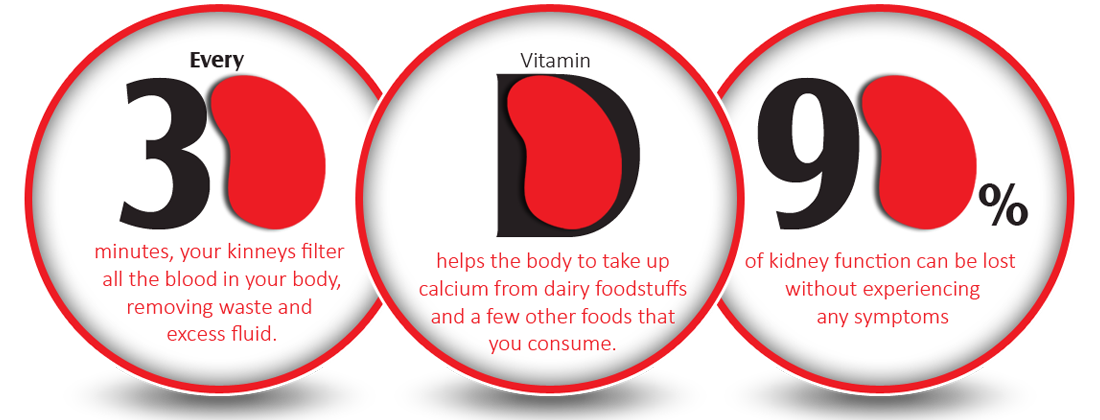
 Common assumption is that the kidneys are responsible for producing urine, but in addition to this there are several vital functions of Kidneys in our body like: Common assumption is that the kidneys are responsible for producing urine, but in addition to this there are several vital functions of Kidneys in our body like:
-
Removing extra fluid and water from your body
-
Filtering the blood
-
Balancing fluid content in our body
-
Produce renin enzyme to control blood pressure
-
Produce erythropoietin hormone to catalyze the formation of red blood cells
-
Maintain healthy bones by activating vitamin D
-
Balance minerals and other chemicals inside our body essential for normal body functions.
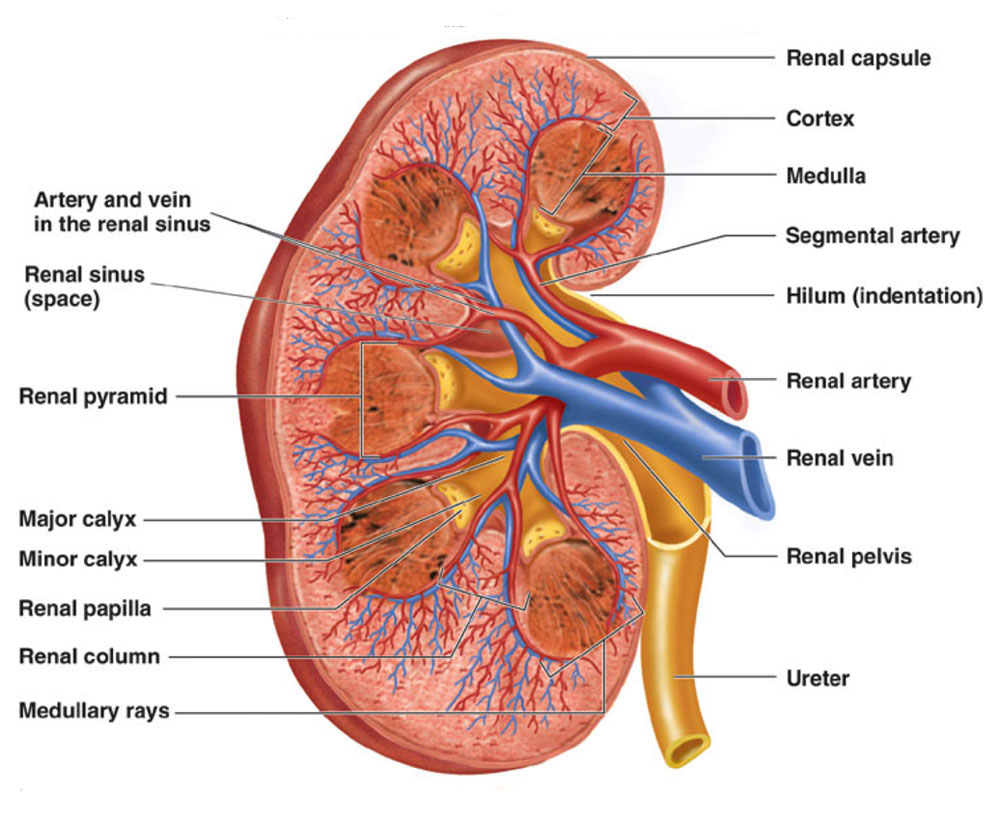
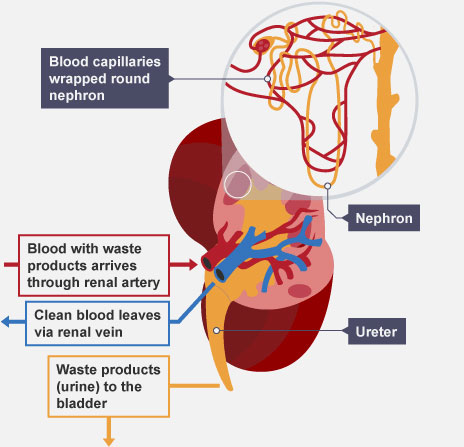
The kidneys functions begins as we eat and drink anything. Once the body consumes the nutrients from the food we eat, all the remaining material become waste products. These wastes either winds up in our blood or has to be filtered out. As the blood is constantly circulating inside out body with each heart-beat, the kidneys - along with its millions of nephrons - constantly filters our blood to clean it from the wastes and remove the extra fluids. These extra fluid and waste becomes urine and travels from the kidneys down the ureters into the urinary bladder which finally passes out through the urethra.
The removal of waste products is only one of the important job of our kidneys. Another vital role of kidneys is to monitor the chemicals, salts and acids in the blood. The nephrons are having sensors inside then to track sodium, phosphorus, calcium and potassium. When these levels are high, the kidneys signals to remove the excess chemicals from our blood.
In addition to these functions the kidneys are also involved to monitor and regulate other body functions like they secrete Renin enzyme which are responsible for controlling the blood pressure. It also produces hormone called erythropoietin which facilitated the bone marrow for producing red blood cells as well as calcitriol hormone which in making the bones strong. |